SCIENTISTS FOUND TWO COMPOUNDS THAT CHANGED AGING SKIN
Here’s what the human studies actually showed
Retinol, antioxidants, peptides and barrier lipids target different aspects of aging skin. Here’s what the research tells us — and why combining these approaches is so interesting.
Skin aging is visible on the surface, but much of what we see begins deeper in the biology of the skin.
Over time, collagen production changes. Oxidative stress accumulates. The skin barrier becomes less efficient at retaining moisture. Cell renewal slows, and years of ultraviolet exposure contribute to fine lines, uneven texture and pigmentation.
The interesting question is no longer simply whether a moisturizer can make skin feel softer.
It is:
Can specific topical compounds influence some of the biological processes behind visible skin aging?
Human research suggests that some can.
And two ingredients are particularly interesting: RETINOL AND IDEBEONE.

Retinol: One of the Most Studied Ingredients in Skin Aging
Retinoids have been studied for decades because they interact with pathways involved in epidermal renewal and the skin’s extracellular matrix.
One long-term, double-blind, vehicle-controlled study evaluated a topical formulation containing 0.1% stabilized retinol for 52 weeks.
Researchers reported a 44% improvement in crow’s-feet fine lines and an 84% improvement in mottled pigmentation with the tested formulation.
Biopsy findings also showed changes involving type I procollagen, hyaluronan and Ki67, providing biological context for the visible improvements observed during the study.
But there is an important distinction.
Those percentages belong to the specific 0.1% retinol formulation studied. They are not results from ELX Skin Renewal Cream and should not be interpreted as guaranteed outcomes from another retinol product.
What the study helps demonstrate is something broader: retinol is not simply a fashionable skincare ingredient. There is human evidence supporting its role in addressing visible features of photoaged skin.

Idebenone: The Antioxidant Story
Idebenone is an antioxidant structurally related to coenzyme Q10.
In a human study involving 41 women aged 30–65 with moderately sun-damaged skin, researchers evaluated topical formulations containing idebenone.
After six weeks of twice-daily use, the formulation containing 1% idebenone was associated with a 29% reduction in fine lines and wrinkles, a 26% improvement in skin roughness and dryness, and a 37% increase in hydration.
Researchers also reported biopsy changes involving collagen I staining and markers associated with inflammation and collagen breakdown.
There is, however, an important limitation: the study did not include a vehicle-control group.
That means the improvements cannot be attributed to idebenone alone, nor does the study demonstrate a literal “29% reversal of biological skin aging.”
It does, however, provide an intriguing human signal for antioxidant-based approaches to visible photoaging.

The More Interesting Question: What If a Formula Targets More Than One Pathway?
This is where the science connects naturally to formulation.
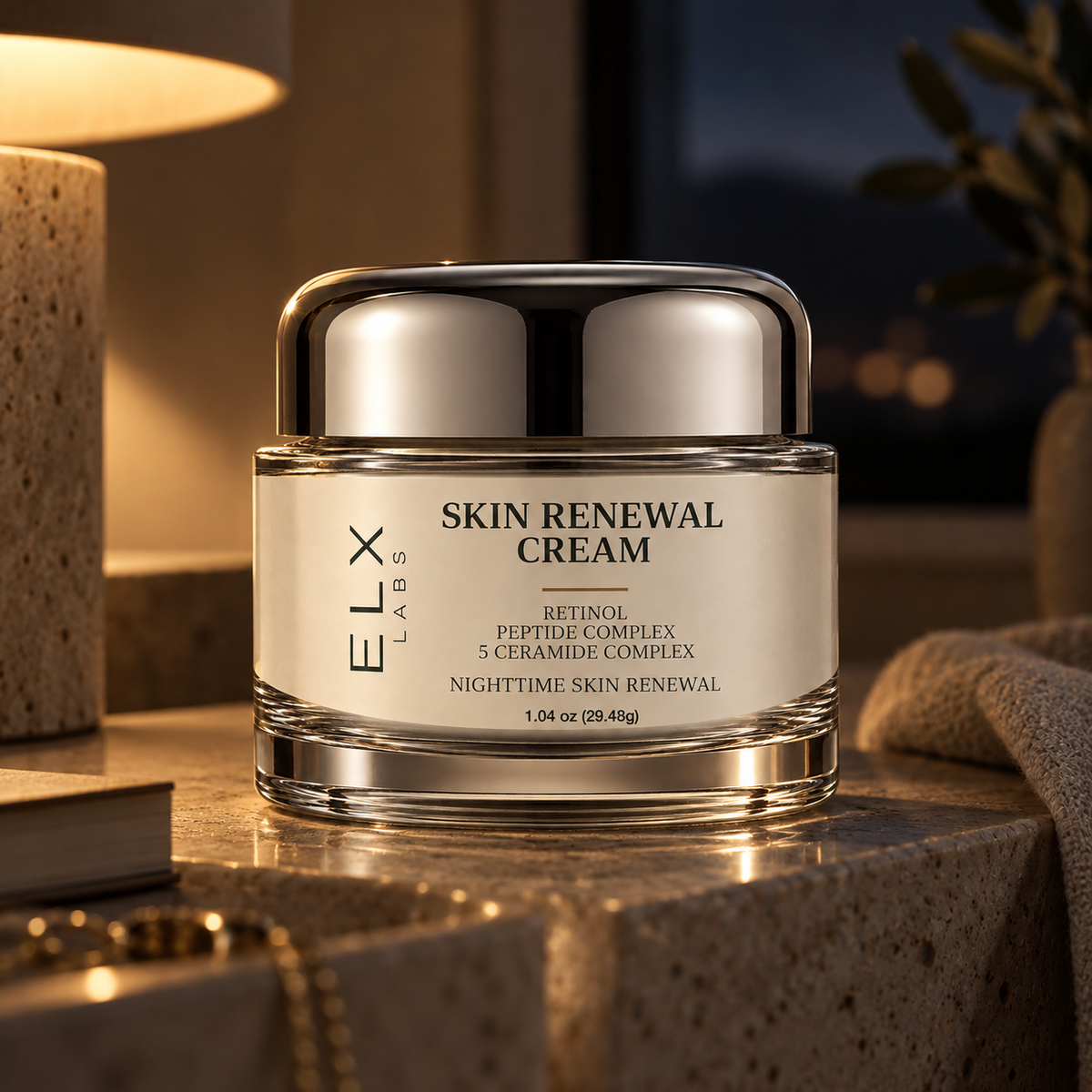
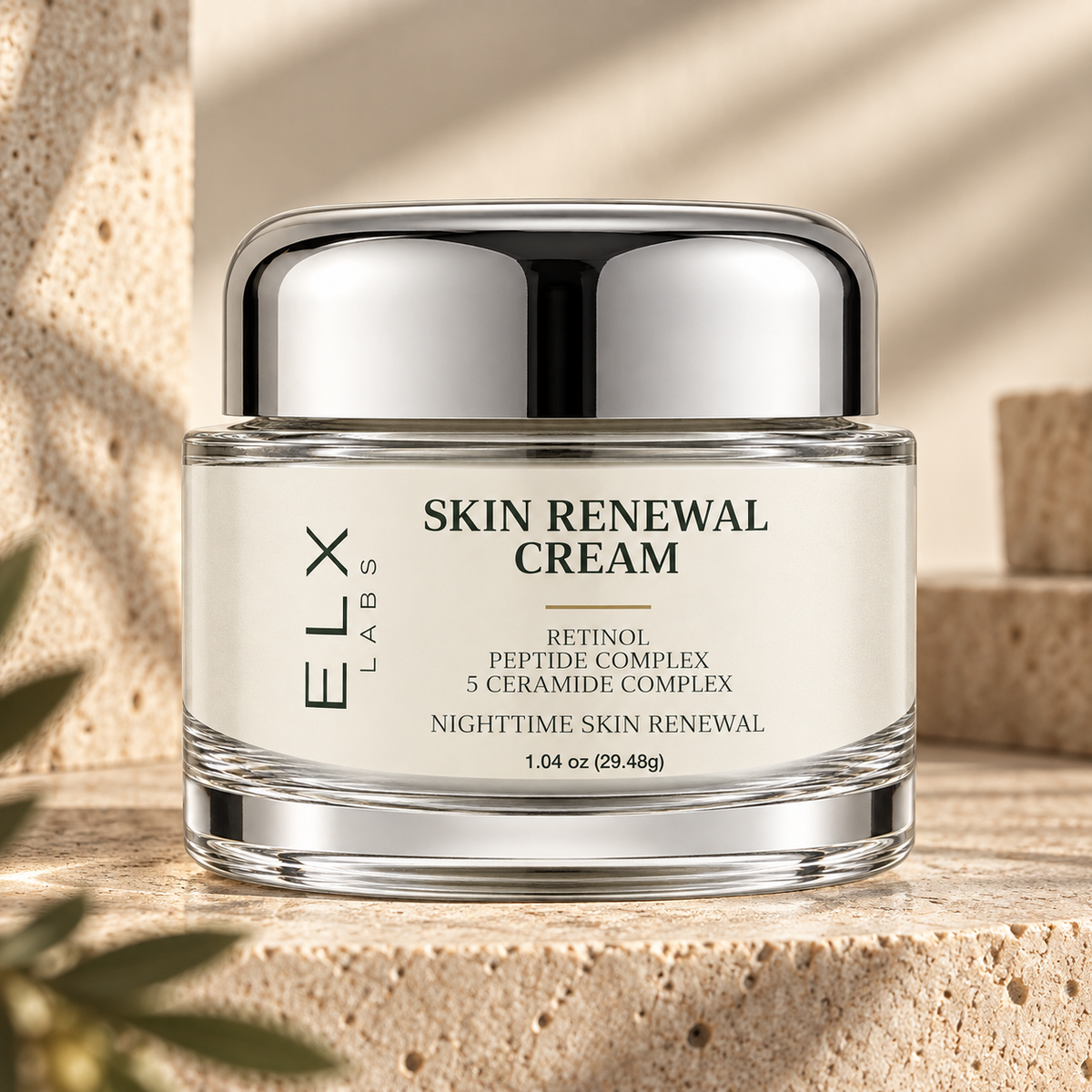
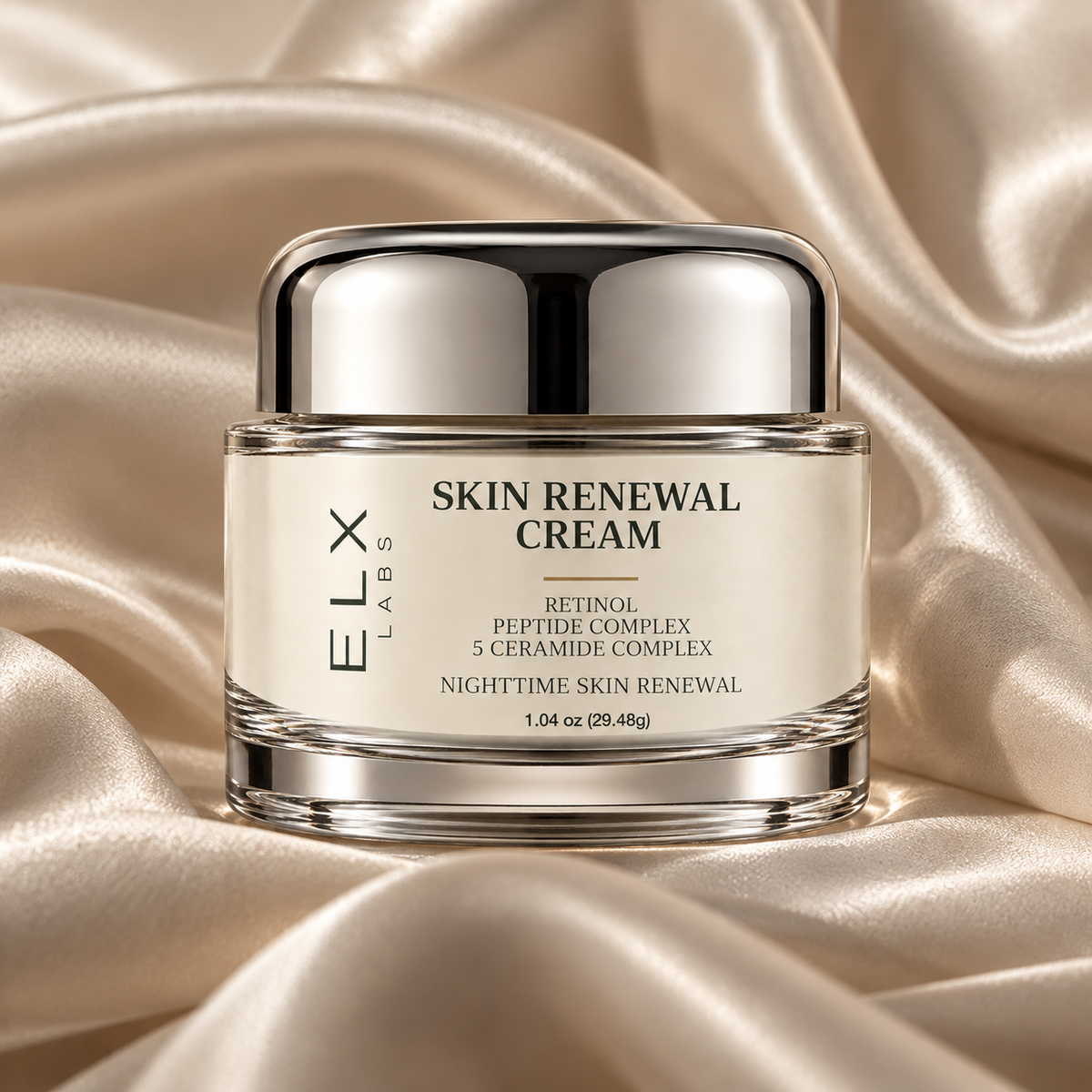
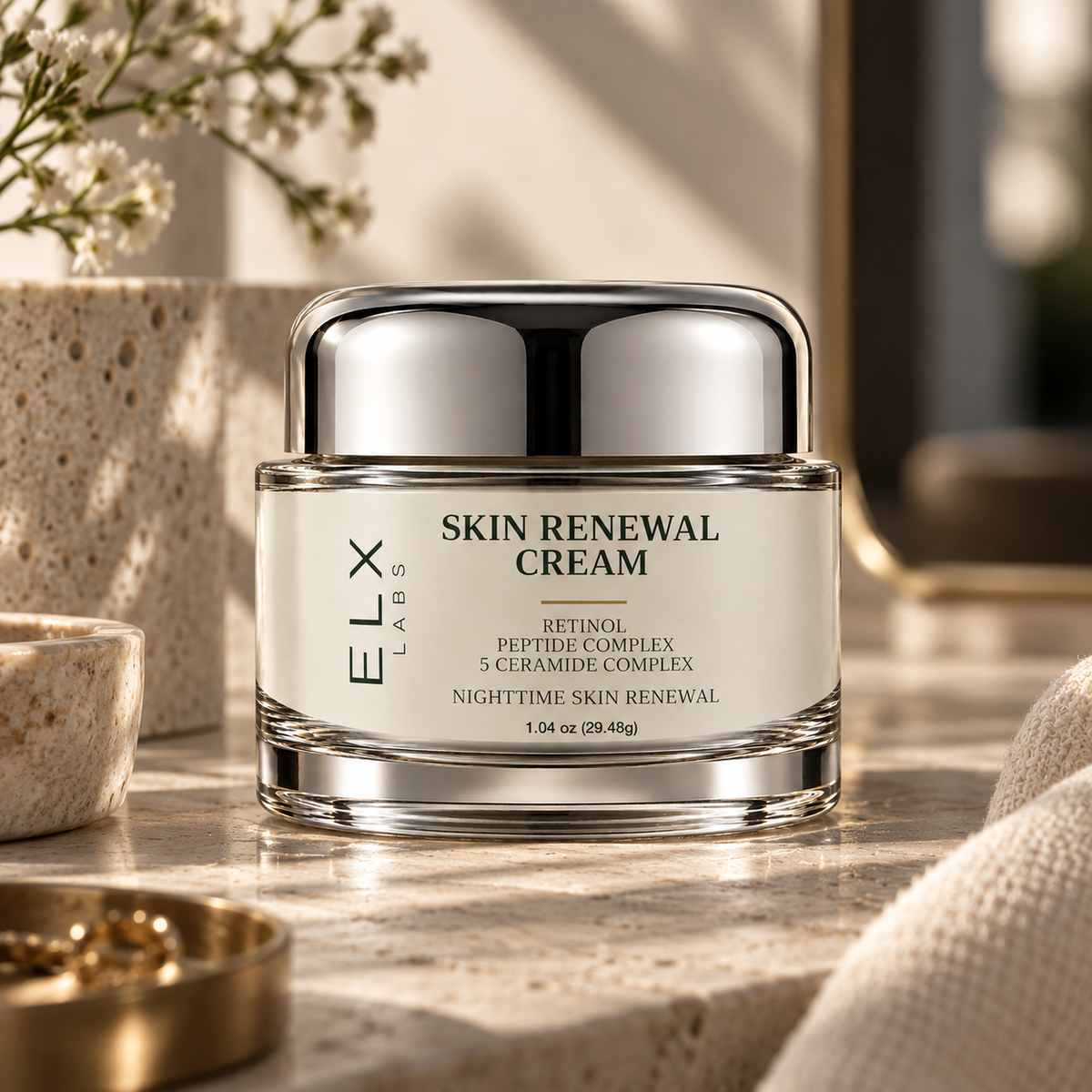
Rather than building a nighttime cream around retinol alone, ELX Skin Renewal Cream combines multiple categories of ingredients in a single formula.
RENEW
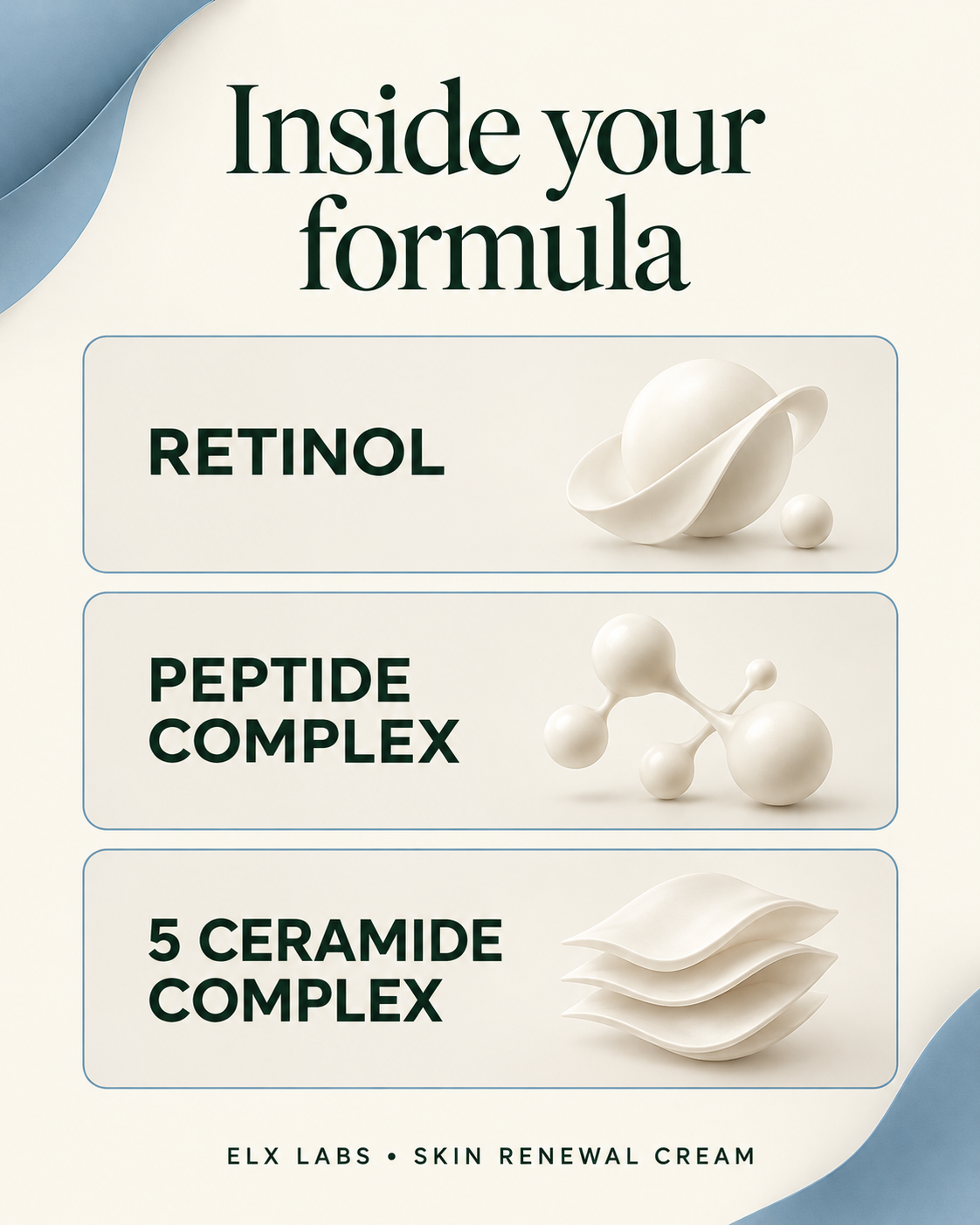
Retinol + Retinyl Palmitate + 2 Palmitoyl Peptides
The retinoid system provides the foundation of the skin-renewal approach, complemented by two palmitoyl peptides.
SUPPORT THE SKIN BARRIER
5 Ceramides + Cholesterol + Phospholipids
Ceramides and other barrier lipids are included to support the skin barrier — particularly relevant in a formula designed for nighttime renewal.
HYDRATE
Aloe + Glycerin + Shea Butter
Humectant and emollient ingredients help maintain hydration and improve the feel of the skin.
ANTIOXIDANT SUPPORT
Idebenone + Vitamin E
The formula adds antioxidant support alongside its renewal and barrier-focused ingredients.
The result is not simply “a retinol cream.”
It is a multi-pathway nighttime skin-renewal formula designed around renewal, hydration, barrier support and antioxidant protection.

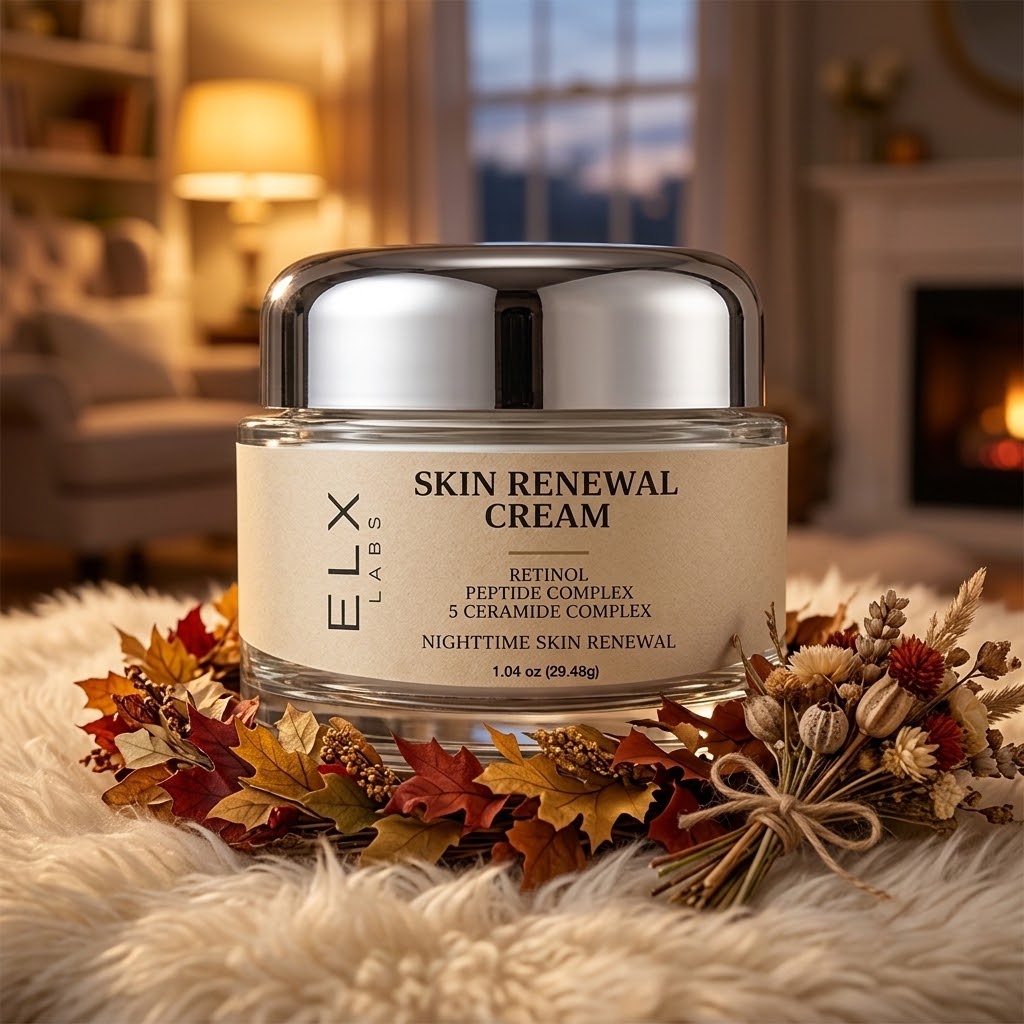
Meet ELX Skin Renewal Cream
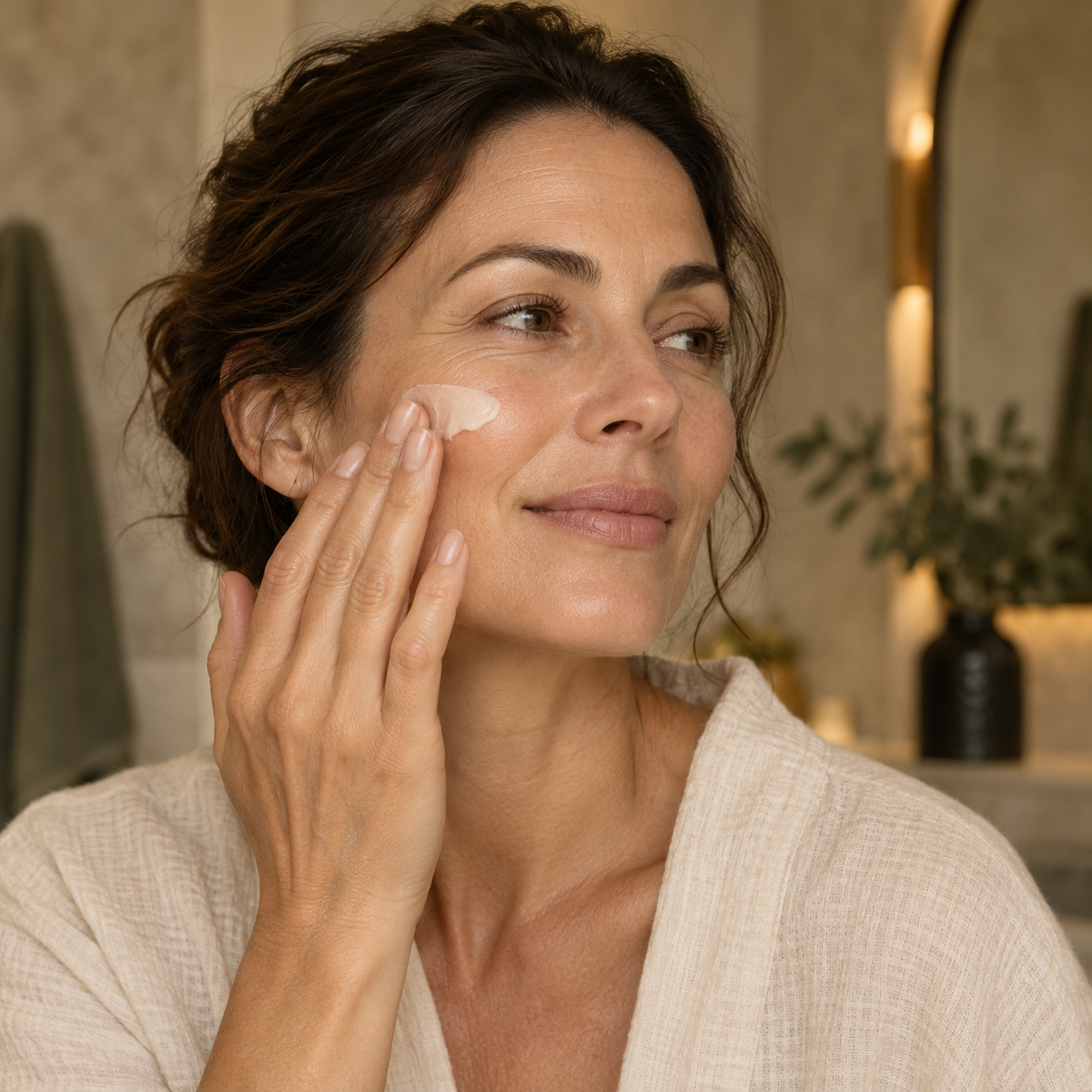
Science-driven nighttime care for smoother, hydrated, healthier-looking skin.
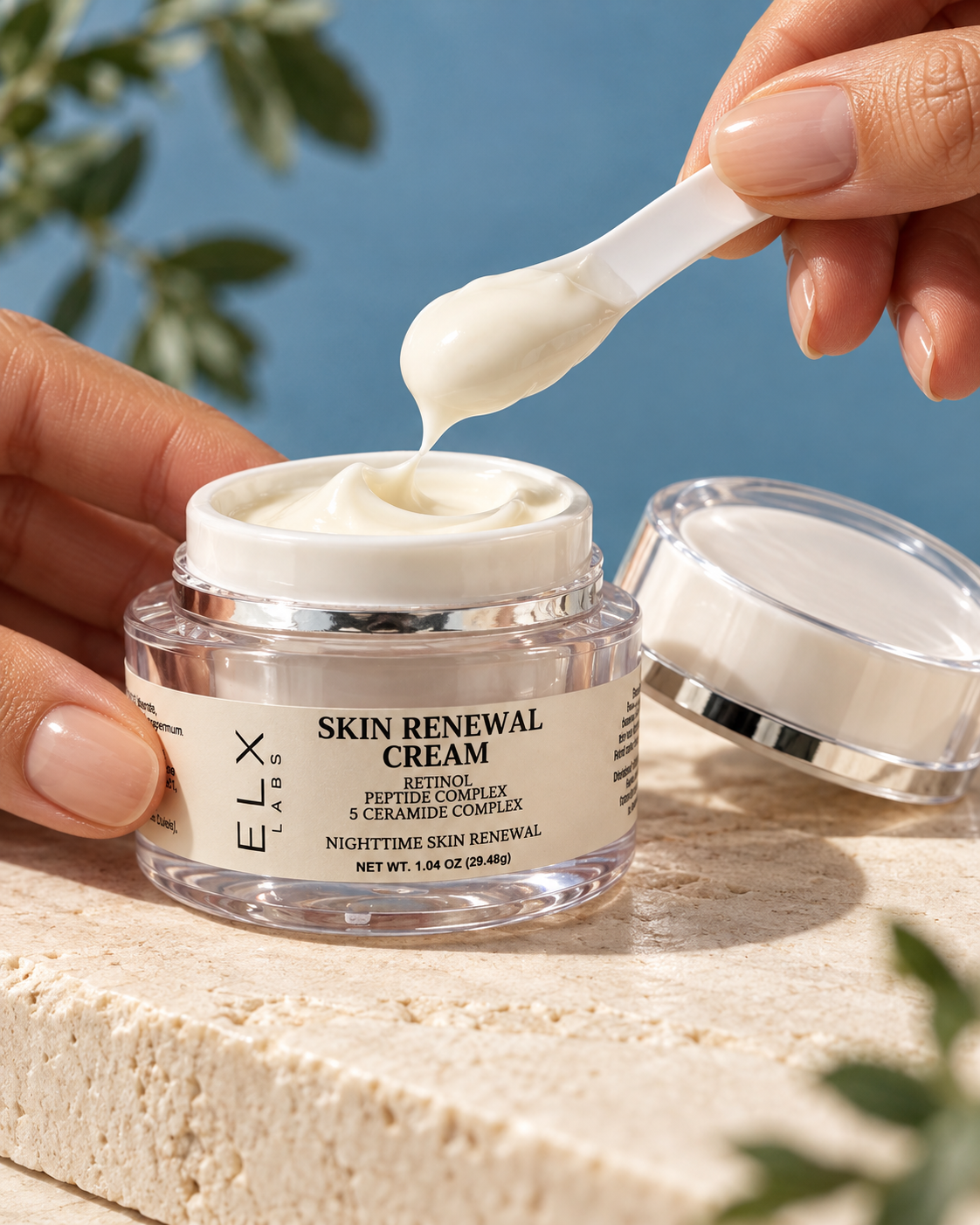
ELX Skin Renewal Cream brings together:
- Retinol + Retinyl Palmitate
- 2 Palmitoyl Peptides
- 5-Ceramide Complex
- Idebenone
- Hydrolyzed Collagen & Elastin
- Vitamin E, Aloe & Shea Butter
Instead of asking one ingredient to do everything, the formulation approaches visible skin aging from several complementary directions.
And that distinction matters.
The clinical studies discussed above help us understand why ingredients such as retinol and idebenone are scientifically interesting. They are not clinical trials of the finished ELX formula, and their numerical results should not be interpreted as results you will necessarily experience from ELX Skin Renewal Cream.
What ELX does is take those ingredient categories and bring them together in one nighttime formula.
EXPLORE ELX SKIN RENEWAL CREAM
A Smarter Way to Think About Skin Longevity
Skin longevity isn't about making unrealistic promises to “reverse aging.”
It is about understanding which biological processes contribute to the visible changes we associate with aging — and building routines around ingredients with a rational scientific basis.
Retinoids address one part of that picture.
Antioxidants address another.
Barrier lipids, peptides and hydration support still others.
The future of skincare may be less about finding one miracle ingredient and more about intelligently combining complementary mechanisms.
That is the philosophy behind ELX Skin Renewal Cream.
DISCOVER THE FORMULA
References
McDaniel DH, et al. Clinical efficacy assessment in photodamaged skin of 0.5% and 1.0% idebenone. Journal of Cosmetic Dermatology.
One-year topical stabilized retinol treatment improves photodamaged skin. Journal of Drugs in Dermatology.